Rated 4.7 out of 5 stars
4.7 / 5


726,000+ customers
Free 60-Day Returns
1-Year Warranty
726,000+ customers
Free 60-Day Returns
1-Year Warranty
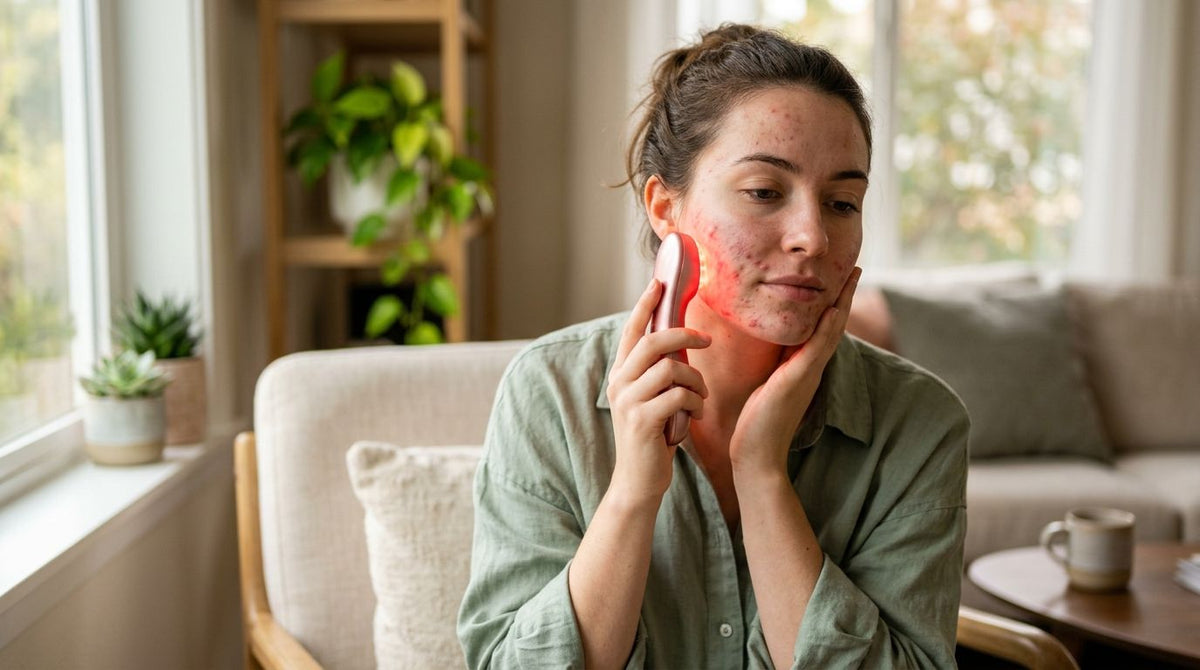
Red light therapy for hormonal acne uses low-level red and near-infrared wavelengths to calm the inflammation and oil production that drive breakouts along the jawline, chin, and lower cheeks — the zones hormonal acne almost always targets. Unlike surface-level acne from clogged pores or bacteria, hormonal breakouts cycle with testosterone and progesterone shifts, so treatment needs to be consistent across weeks, not just applied when a pimple shows up. This guide breaks down how to build a red light routine specifically for cyclical, jawline-heavy acne.
Hormonal acne shows up differently than teenage or bacterial acne — it clusters along the jawline, chin, and sometimes the neck, flares around the menstrual cycle, and tends to leave behind deeper, more inflamed cysts rather than surface whiteheads. Picking a device or protocol for hormonal acne without accounting for that pattern means treating the wrong zone or giving up before the cycle-dependent inflammation has time to settle.
Red and near-infrared light (typically in the 630-660nm and 830-850nm range) reduce inflammatory cytokines in the skin and support faster healing of active lesions, while blue light (around 465nm) targets the bacteria component that can co-occur with hormonal flares. For someone dealing with cyclical breakouts, the practical question isn't "does red light work" — it's "how do I apply it consistently enough, in the right spot, to outlast a 28-day hormonal cycle." That's the gap this guide fills.
Before choosing a device or routine, confirm the breakout pattern actually matches hormonal acne rather than fungal acne, folliculitis, or a reaction to a new product.
Not every red light device is built the same way, and hormonal acne responds best to a combination approach rather than red light alone.
Hormonal acne routines fail most often because people either skip days around their period (when they need it most) or overdo intensity early and give up.
Red light therapy for hormonal acne works better alongside — not instead of — a basic acne-safe routine, but the wrong pairing can cancel out the benefit.


General acne guides often treat the whole face uniformly, but hormonal acne concentrates so heavily on the lower third of the face that zone-specific technique matters.
Hormonal acne is cyclical, so judging a red light routine against a single week of results is the fastest way to quit a routine that's actually working.
Red light therapy supports a hormonal acne routine but doesn't replace medical treatment for cystic or scarring acne.
| Option | Best for | Key limitation |
|---|---|---|
| Solawave Bye Acne spot treatment | Isolated active cysts on jawline or chin | Not built for full-face or preventive coverage |
| Solawave 4-in-1 Radiant Renewal wand | Jawline-to-neck coverage in one session | Requires manual gliding across the full breakout zone |
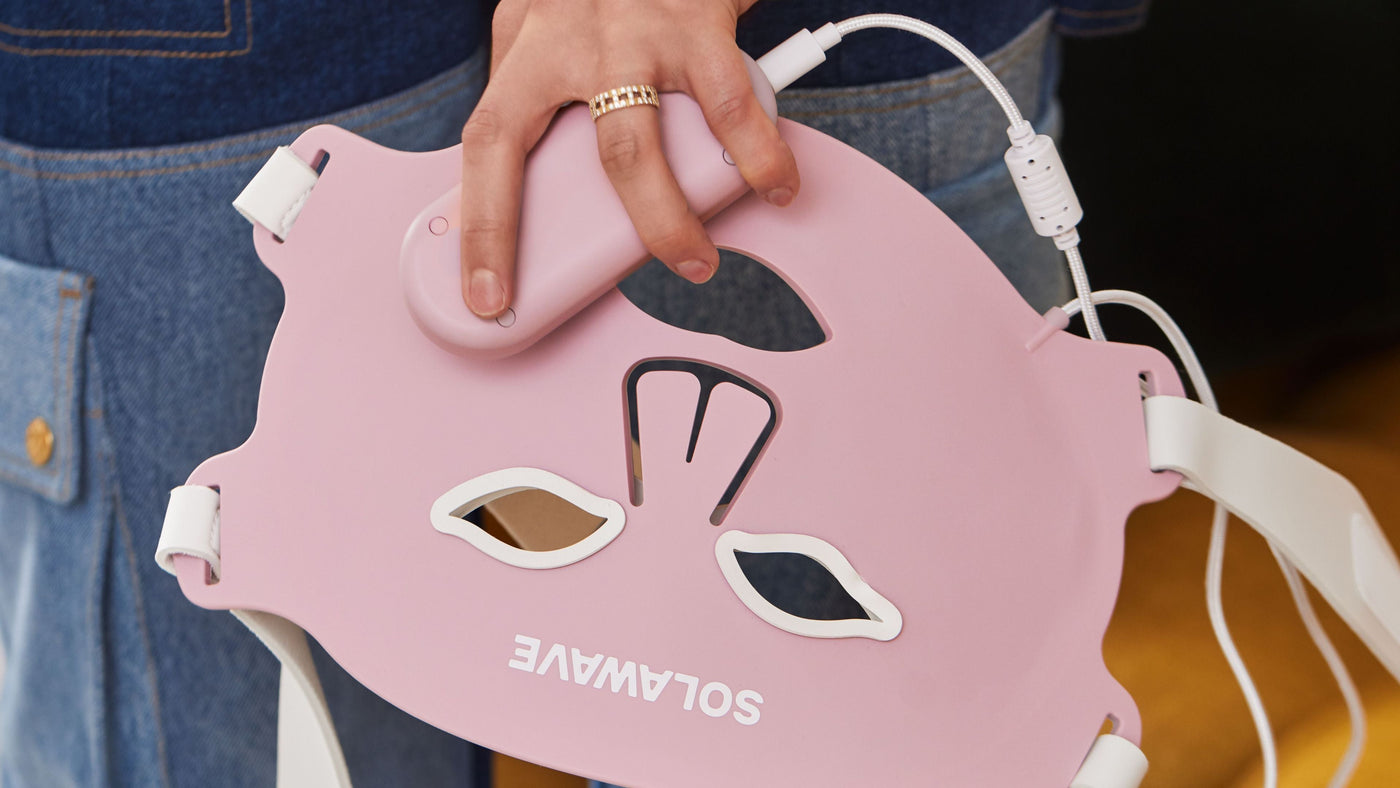
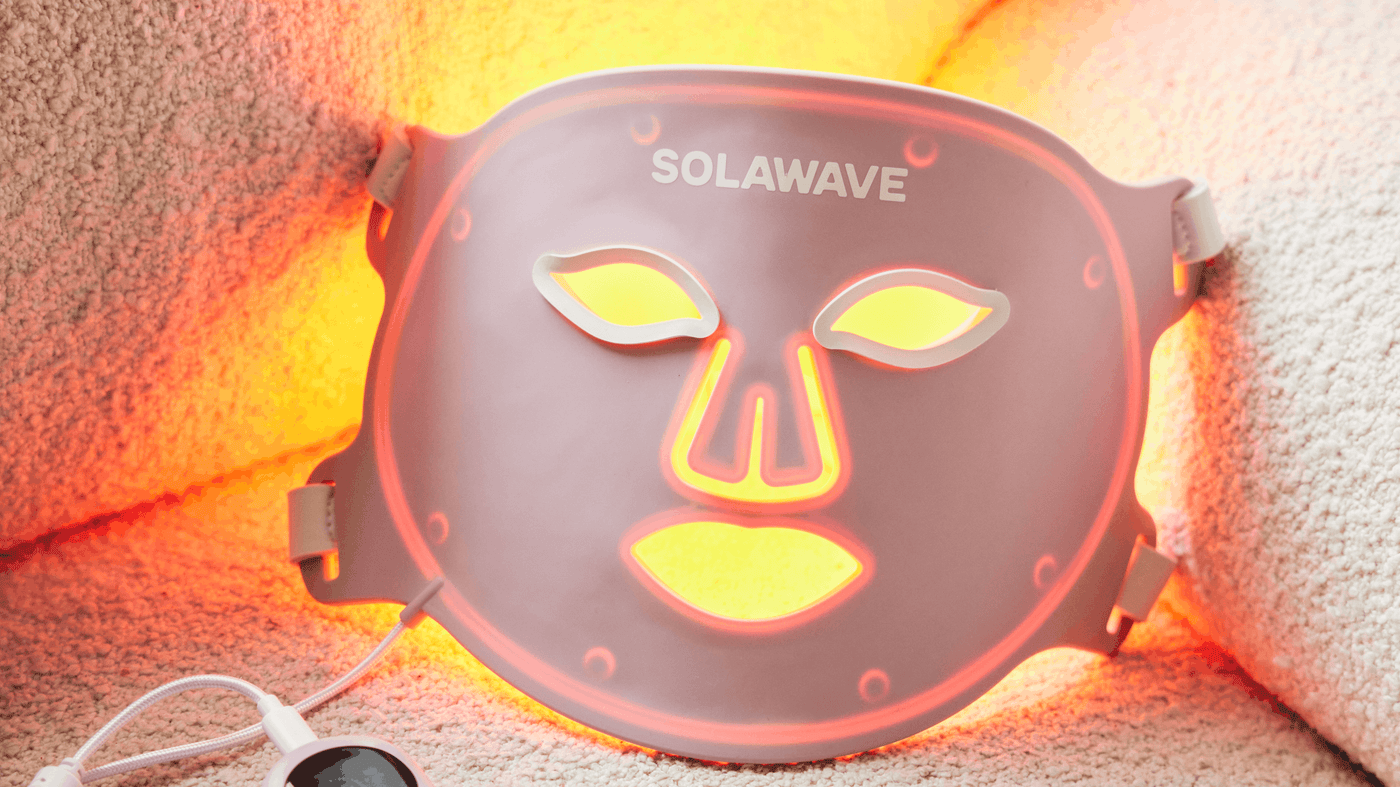
| LED face mask (Wrinkle Retreat Pro) | Hands-free full-face sessions | Less targeted pressure on isolated cysts |
| OTC topical retinoids | Long-term texture and post-acne marks | Can increase photosensitivity if paired same-night with light |
| In-office blue light or laser therapy | Severe or scarring cystic acne | Requires appointments and ongoing cost outside at-home routines |
Verdict: for jawline-clustered hormonal breakouts, a handheld red and blue light combination device paired with a consistent 8-12 week schedule outperforms spot-only treatment for most users.
Does red light therapy actually help hormonal acne?
Red light therapy reduces inflammation and supports faster healing of active breakouts, which helps hormonal acne when used consistently for 8-12 weeks alongside a basic acne-safe skincare routine.
How long before red light therapy shows results on hormonal acne?
Most users need 8-12 weeks, or 2-3 full menstrual cycles, of consistent sessions before seeing a real reduction in new breakouts. Judging results after one week misses the cyclical pattern entirely.
Can I use red light therapy on active cystic acne?
Yes, with light contact rather than pressure over the lesion. A blue and red light combination device like Solawave's Bye Acne is FDA-cleared for mild-to-moderate acne spot treatment.
Is red light therapy better than blue light for hormonal acne?
Red light addresses the inflammation component of hormonal acne while blue light targets bacteria, so a combination device covers more of what drives a hormonal breakout than either wavelength alone.
Should I use red light therapy every day for hormonal acne?
Start at 4-5 days a week and build to daily use once skin tolerates it without added redness. Daily consistency matters more for hormonal acne than session length.
Can red light therapy replace prescription acne treatment?
No. Red light therapy supports a routine but doesn't replace dermatologist-prescribed treatment for severe, painful, or scarring cystic acne.
Does red light therapy help with hormonal acne scars too?
Red and near-infrared light support collagen activity that can improve the appearance of post-acne marks over time, though active breakouts should be the first priority in a hormonal acne routine.
The detail most hormonal acne routines miss in 2026 isn't the device — it's the zone. Spend disproportionate time on the jawline and chin specifically, even after breakouts on the cheeks or forehead have cleared, because hormonal acne recurs in that exact band with almost every cycle. A device that covers the whole face evenly will always underperform one used with deliberate extra passes along the jaw.
 Acne
Acne